
Table of Contents
- What Defines a Timeless Luxury Wardrobe?
- The Luxury Capsule Wardrobe Essentials You Need
- How to Identify Quality Clothing Before You Buy
- Choosing Investment Pieces for Women That Pay Off
- How to Style Luxury Basics for Any Occasion
- Caring for Your Wardrobe to Extend Its Lifespan
- Your Seasonal Transition Strategy
- Build Your Curated Closet Today
- Frequently Asked Questions
Last Updated: September 8, 2026
What Defines a Timeless Luxury Wardrobe?
A timeless luxury wardrobe is a curated collection of high-quality, versatile pieces designed to outlast seasonal trends and serve you for years, not months. This guide will show you how to build one that reflects your personal style while offering value over time.
Most people confuse "expensive" with "luxury." A closet full of designer logos isn't timeless; it's just costly. True luxury is quiet, it whispers through the feel of a cashmere sweater, the drape of a silk blouse, and the crisp line of a tailored blazer.
A timeless luxury wardrobe is the antithesis of fast fashion. It is a deliberate, strategic investment in your appearance and peace of mind. When you stop chasing trends and build a foundation of elevated essentials, getting dressed becomes simpler and your style more defined.
The Luxury Capsule Wardrobe Essentials You Need
Building your collection starts with understanding the core building blocks. A luxury capsule wardrobe essentials list focuses on pieces with high versatility and impeccable construction.
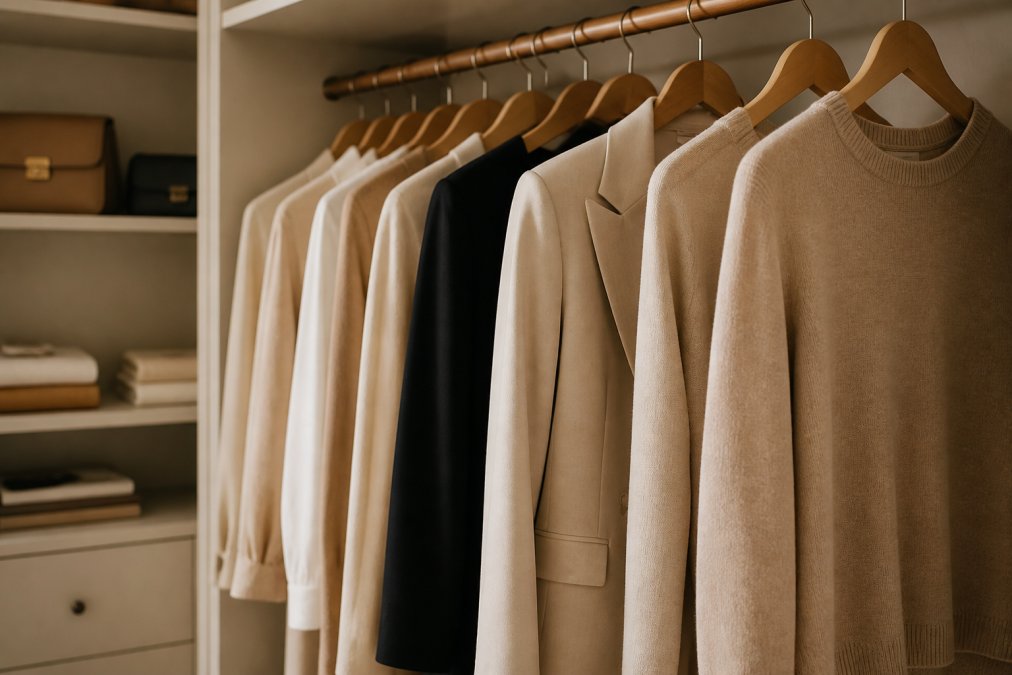
Here are the non-negotiables for most wardrobes:
- The Perfect Blazer: A well-structured blazer in a neutral tone (navy, black, or camel) instantly elevates jeans or trousers.
- The Crisp White Shirt: Invest in one made from high-quality cotton or silk. It is the most versatile piece you will own.
- The Cashmere Sweater: Choose a fine-gauge knit in a classic color. It offers warmth without bulk and works for both office and weekend wear.
- The Tailored Trouser: A pair of trousers with a perfect fit and a slight taper creates a long, clean silhouette.
- The Little Black Dress: Select a style with minimal embellishment that you can dress up or down.
- The Silk Scarf: A simple luxury accessory that can add a pop of color or serve as a belt, headband, or bag accent.
- Quality Denim: A premium pair of jeans in a dark wash acts as a smart-casual anchor.
- The Leather Handbag: This is your signature investment piece. Choose a classic shape in a neutral color that you will carry for a decade.
A common mistake is buying all of these at once. Build your capsule gradually, acquiring one or two exceptional pieces each season.
How to Identify Quality Clothing Before You Buy
Once you know what you need, the next step is learning how to identify quality clothing. It comes down to three key elements: fabric, construction, and finish.
First, examine the fabric content. Natural fibers are the hallmark of luxury textiles. Look for 100% cashmere, silk, wool, and cotton. These materials breathe, drape beautifully, and improve with age. Synthetic blends, while often cheaper, can pill, retain odors, and lose their shape. A garment with a high percentage of natural fibers is a strong indicator of quality.
Second, inspect the construction. Turn the garment inside out. Look at the seams; they should be straight, even, and finished with a serger or French seams to prevent fraying. Check the buttons; they should be securely attached, and ideally, you should receive spares. Examine the lining; a quality lining is essential for jackets and skirts to maintain their shape and feel comfortable against the skin.
Finally, assess the finish and weight. Hold the garment up to the light. Is the fabric opaque? Does it have a natural luster? Feel the weight of the material; heavier fabrics typically indicate higher thread count or denser weaves, which translates to better durability. The FTC guidelines on textile labeling require clear disclosure of fiber content, which makes it easier to verify these details before you buy.
Choosing Investment Pieces for Women That Pay Off
Choosing investment pieces for women isn't about buying the most expensive item; it's about buying the right one for your specific life. The core principle is cost-per-wear, but applying it effectively requires a framework beyond simple math.
Cost-per-wear is calculated by dividing the price of the garment by the number of times you will wear it. A $300 pair of trousers worn 100 times costs $3.00 per wear; a $60 pair of trendy pants worn twice costs $30 per wear. The missing piece in most guides is why you will wear something 100 times, the answer lies in aligning purchases with your personal style archetype.
Most style guides assume one generic "timeless" look works for everyone. In practice, a timeless wardrobe must serve your actual lifestyle. Consider which archetype best describes your daily reality:
- The Corporate Classic: You work in a formal environment (law, finance, consulting). Your wardrobe centers on suiting, silk blouses, and structured handbags. Timeless for you means investing in a second pair of your favorite tailored trousers before they are discontinued, and prioritizing a tailor who knows your measurements.
- The Creative Professional: You work in a field that allows self-expression (design, media, tech). Your wardrobe blends elevated basics with artistic touches. Timeless for you means investing in a signature leather jacket or a unique silk print that you can rotate through a sea of neutral separates.
- The Urban Minimalist: Your life is a mix of meetings, gallery openings, and travel. Your wardrobe is compact and highly versatile. Timeless for you means owning fewer, higher-quality items that can transition from a flight to a dinner without a stop at home.
Once you identify your archetype, the three-question test becomes sharper: Does this fit into my existing color palette and my archetype's uniform? Can I wear this for multiple occasions that actually appear on my calendar? Will this still look stylish in five years and still fit the evolution of my career or lifestyle?
A common stylist pattern is the "uniform" approach: identify the outfit formula you feel most confident in (e.g., tailored trouser + fine-gauge knit + loafer) and invest in multiple iterations in different fabrics. This is strategic, it ensures every purchase gets worn, driving down cost-per-wear dramatically.
For guidance on timeless construction, resources like the Good On You sustainability ratings can help you research brands committed to ethical and durable production, ensuring your investment aligns with your values.
How to Style Luxury Basics for Any Occasion
The true test of a capsule wardrobe is how to style luxury basics to create different looks. The goal is effortless elegance, the secret lies in the details and mixing textures.
Start with a monochromatic base. Dressing in a single color from head to toe, such as all black or all cream, instantly looks chic and expensive. The lack of color contrast makes fabric quality and tailoring precision the focal point.
Then, introduce texture and contrast. Pair a chunky cashmere sweater with a sleek silk skirt. Combine the structure of a tailored blazer with the softness of a fine-gauge knit. The interplay of fabrics adds depth and visual interest without relying on prints or logos.
Accessorize with intention. Your statement pieces should be limited and meaningful. A beautiful watch, a silk scarf, or a pair of pearl earrings can transform a simple white shirt and jeans into a polished ensemble. With luxury basics, the pieces themselves do the heavy lifting; accessories are just the punctuation.
Here is a quick formula for creating a versatile look:
- Work: Tailored trouser + crisp white shirt + blazer + leather loafers.
- Weekend: Cashmere sweater + quality denim + silk scarf + clean white sneakers.
- Evening: Little black dress + statement jewelry + elegant heels + structured handbag.
Caring for Your Wardrobe to Extend Its Lifespan
A luxury wardrobe is a significant financial commitment. To protect that investment, you must master garment care techniques that go beyond basic washing and folding, keeping pieces looking new for years and reinforcing your commitment to sustainable fashion.
The most important rule is to wash less. Over-washing strips natural oils, fades colors, and breaks down fibers. Instead of washing after every wear, air out your garments overnight. For jeans and sweaters, you can often get multiple wears between washes; for silk and cashmere, rotate pieces and allow 48 hours of rest between wears.
When you do wash, be gentle. Always check the care label. Hand-wash delicates in cold water with a gentle detergent designed for wool or silk. For machine washing, use the delicate cycle and a mesh laundry bag. Never use a tumble dryer; lay sweaters flat to dry and hang shirts on quality wooden or padded hangers. Dry clean structured garments like blazers and coats only once or twice a season.
Proper storage is equally crucial. Moths are the enemy of natural fibers like cashmere and wool. Store these items in breathable cotton garment bags or cedar drawers. The EPA guidance on responsible pest control highlights the importance of prevention over chemical treatments. For shoes and handbags, keep them in their original dust bags and stuff them with tissue paper to help them retain their shape. For leather goods, a common professional tip is to condition them every six months with a high-quality leather balm to prevent cracking.
The repair-first mindset is what separates a collector from a consumer. A timeless wardrobe is maintained, not replaced. Before discarding a damaged item, seek out a professional tailor or cobbler. Common repairs include:
- Replacing buttons: A missing button on a blazer is a 15-minute fix, not a reason to retire the garment.
- Re-hemming trousers: Weight fluctuations or heel height changes can be addressed by a tailor for a fraction of the cost of new trousers.
- Re-soling shoes: A quality leather sole can be replaced by a cobbler, extending the life of your favorite loafers by years.
- Invisible mending: For small tears or moth holes in cashmere, a specialist can perform invisible mending that makes the repair nearly undetectable.
Seasonal deep-care routine. Twice a year, perform a deep-care session on your entire wardrobe. This includes:
- Steaming: Use a garment steamer to remove wrinkles and refresh fabrics without heat damage.
- Brushing: Use a soft clothing brush on wool and cashmere to remove surface dirt and restore the nap.
- Conditioning: Apply leather conditioner to bags and shoes.
- Inspecting: Check for loose threads, missing buttons, or early signs of wear, and address them immediately.
This level of care is the practical application of the cost-per-wear principle. A $1,000 cashmere sweater that lasts 20 years with proper care costs $50 per year; the same sweater replaced every three years due to neglect costs over $300 per year.
Your Seasonal Transition Strategy
A well-planned wardrobe doesn't get packed away; it evolves. Your seasonal transition strategy should be a smooth rotation, not a complete overhaul, this is where the versatility of your investment pieces shines.
The key is layering. As the weather cools, your silk dresses transition to fall by adding a turtleneck underneath and a tailored blazer on top. Your summer-weight trousers pair perfectly with a cashmere sweater and a wool coat as temperatures drop. This "shifting the base" approach allows you to wear core pieces for nine to ten months of the year, dramatically increasing their cost-per-wear.
Here is how to approach the change of seasons:
- Perform a wardrobe audit. At the start of each season, take everything out. Assess what you wore and what you didn't.
- Clean before storing. Ensure all items are freshly cleaned before being put away to prevent stains from setting and to deter pests.
- Store off-season items properly. Use breathable storage bins for knits and garment bags for structured pieces.
- Make a "wish list." Identify the gaps in your rotation. This list will guide your purchases for the next season, preventing impulsive buys.
This process keeps your closet organized and reinforces your personal style archetypes, helping you see patterns in what you love and what you actually wear.
Build Your Curated Closet Today
The journey to a timeless luxury wardrobe is not about a single shopping spree. It is a thoughtful, ongoing practice of curating your style with intention, rejecting the noise of fast fashion and embracing the quiet confidence of owning fewer, better things.
The most important step is to start. Begin with a single category, perhaps your workwear or weekend wear. Assess what you have, identify what is missing, and make one quality purchase that aligns with the principles we've discussed.
Frequently Asked Questions
What is the 3-3-3 rule for a capsule wardrobe?
The 3-3-3 rule is a styling method where you pick 3 tops, 3 bottoms, and 3 layers to create a week of outfits. For a timeless luxury wardrobe, apply this rule to your travel or weekly planning to maximize versatility. Choose elevated essentials in a neutral color palette so each piece mixes easily. This approach forces you to focus on fit and proportion rather than volume.
How do you identify high-quality fabrics for a luxury wardrobe?
Check the fiber content first. Natural fibers like wool, silk, cashmere, and cotton indicate higher quality. Examine the fabric's density by holding it up to the light; a tight weave suggests durability. Feel the texture and check for a smooth finish. Look at the seams and interior finishing, as well-constructed garments have neat, reinforced stitching.
What are the essential investment pieces for a timeless wardrobe?
Investment pieces for women should focus on classic cuts and versatility. Start with a tailored blazer, a crisp white shirt, a quality cashmere sweater, well-fitted dark denim, and a structured leather handbag. These items form the foundation of your curated closet and offer high cost-per-wear value because they won't go out of style.
How do you transition a luxury wardrobe between seasons?
Layer your investment pieces. A silk slip dress works in summer alone and in winter under a cashmere turtleneck. Use a seasonal rotation system: store heavy knits in cedar-lined boxes during warmer months and swap in lighter linen pieces. This protects your garments and makes each season feel fresh without new purchases.
How do wealthy people dress casually?
Casual luxury relies on impeccable fit and high-quality basics, not logos. Think tailored trousers with a plain white cotton tee, or a cashmere hoodie with clean sneakers. The focus is on the silhouette and fabric quality. Monochromatic outfits in neutral tones often create that effortless, elevated look.
What is the 70/30 rule for wardrobe?
The 70/30 rule suggests that 70% of your wardrobe should be classic, foundational pieces, while 30% can be trend-driven or statement pieces. This ratio ensures you always have something appropriate to wear while allowing room for personal expression. It is a practical framework for building a timeless luxury wardrobe without sacrificing personality.
Building a timeless luxury wardrobe requires patience, a discerning eye, and access to the right pieces. At Shopping Princess, we understand this journey. We offer a curated selection of high-end fashion and accessories designed to help you express your individual style with confidence and grace. Our focus is on bringing together style, quality, and personality so you can find investment pieces that make you feel fabulous. Explore our collection and start building your curated closet today.